

The Warebid blog
Will This Second-Hand Furniture Fit? A Space-Planning Guide
Plan a useful second-hand furniture setup with room measurements, everyday movement, item dimensions and access in mind.
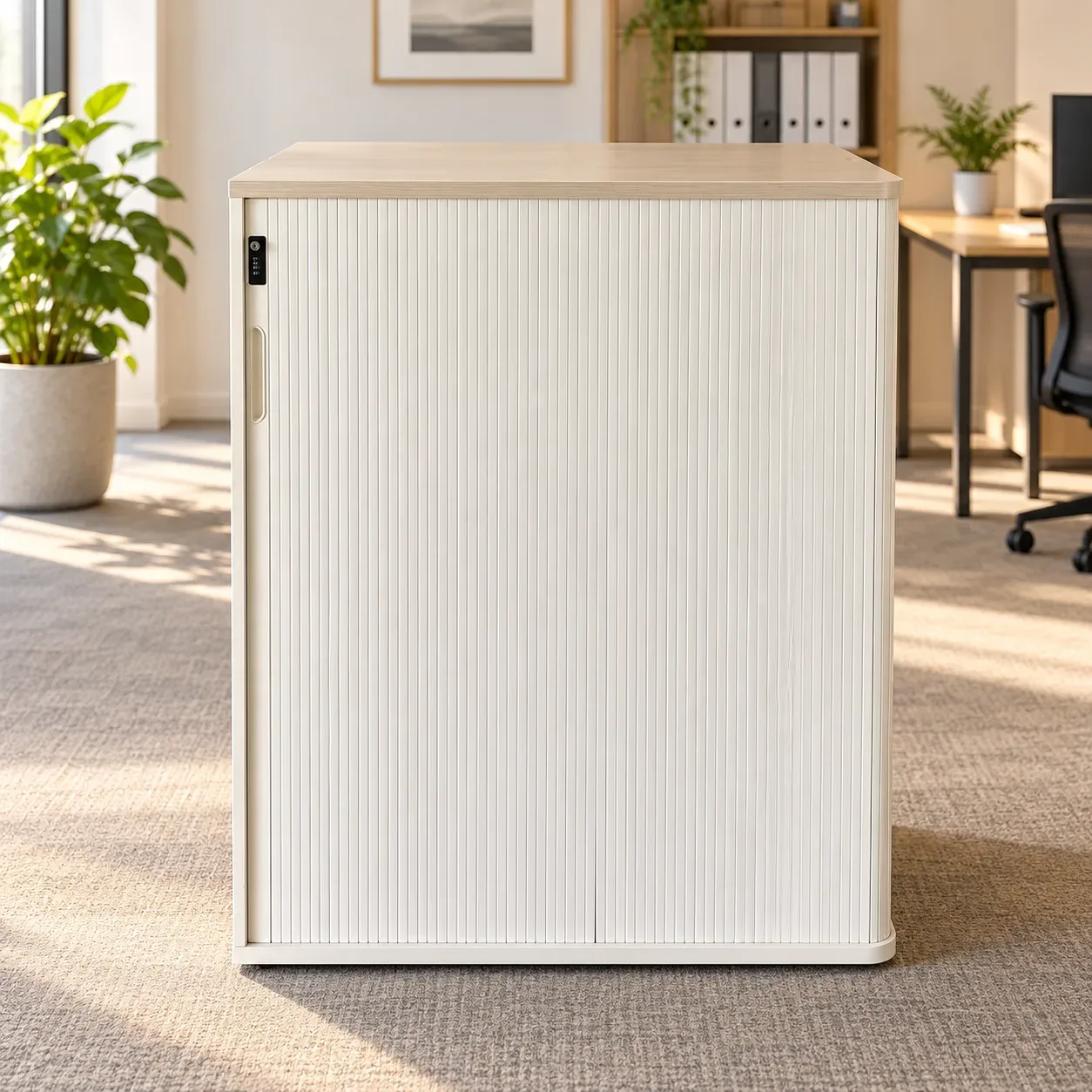
A good second-hand furniture find has a clear place in your room and a useful job to do. Before choosing a desk, chair or cabinet, think about how you will move around it, reach what you need and use the space each day.
That matters in a compact home office as much as a shared workplace. A few measurements and a simple layout can help you choose furniture you will want to keep using.
Start with the job, then choose the piece
Write down what the room needs to support. A desk for a laptop has different requirements from a workstation with two screens and paperwork. A cupboard for occasional storage can sit somewhere that would be awkward for files used throughout the day.
For a team, ask the people using the space which arrangements work well now and what gets in their way. This helps separate a useful addition from an attractive piece that has no clear purpose.
Check what you already have before buying more. An existing table moved to a quieter corner or storage shared between two desks may solve the problem.
Measure the space the furniture will use
Record the room dimensions and mark fixed features: doors, columns, windows, sockets and built-in cupboards. Include anything that needs access, such as a switch or a cabinet door.
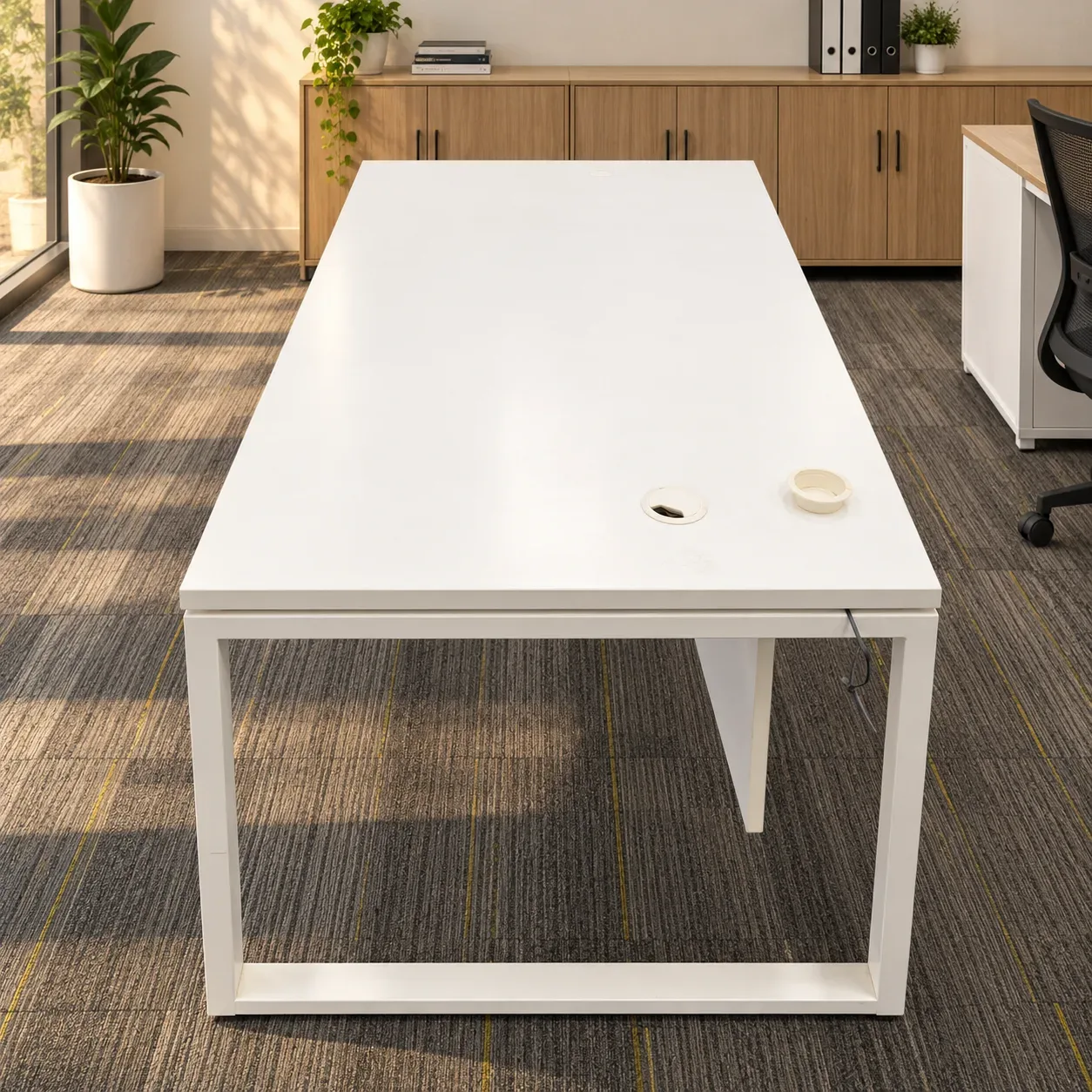
Then allow for the furniture in use. A desk occupies more than its tabletop footprint once someone is seated. A cabinet needs room for its doors or drawers to open. A folding table still needs space around it when set up.
- Desks: width, depth and height, plus room for the chair and everyday movement.
- Chairs: the base, armrest height, movement and any recline you intend to use.
- Storage: external dimensions, door or drawer opening, and access to the contents.
- Meeting furniture: the table, occupied chairs and the route around the seating.
Use removable tape or pieces of paper to mark the proposed footprint on the floor. Try the room as you would normally use it. Can you open the door, reach the storage and move between the main working areas?
Keep required access and escape routes clear. Where the layout affects a shared workplace or building requirements, have the responsible person review it before making changes.
Use the exact listing as your starting point
Furniture with a familiar model name can come in different sizes and configurations. Read the details for the actual item and note any measurements you still need.
For example, an office chair with armrests may fit differently beneath your desk from an armless chair. Two similar cabinets may open differently or have different shelf arrangements. Photographs help you spot these questions, but a photo alone is a poor measuring tool.
Warebid’s pre-owned furniture catalogue includes photographs, quantities and item information. Use the specific listing to build your shortlist, and raise any unanswered questions about dimensions or condition before deciding.
Check the route into the room
Once the piece suits the room, look at the route it would take to get there. Note door openings, lift openings, the lift interior and tight turns. Include fixed handles or other projections when checking the item’s dimensions.
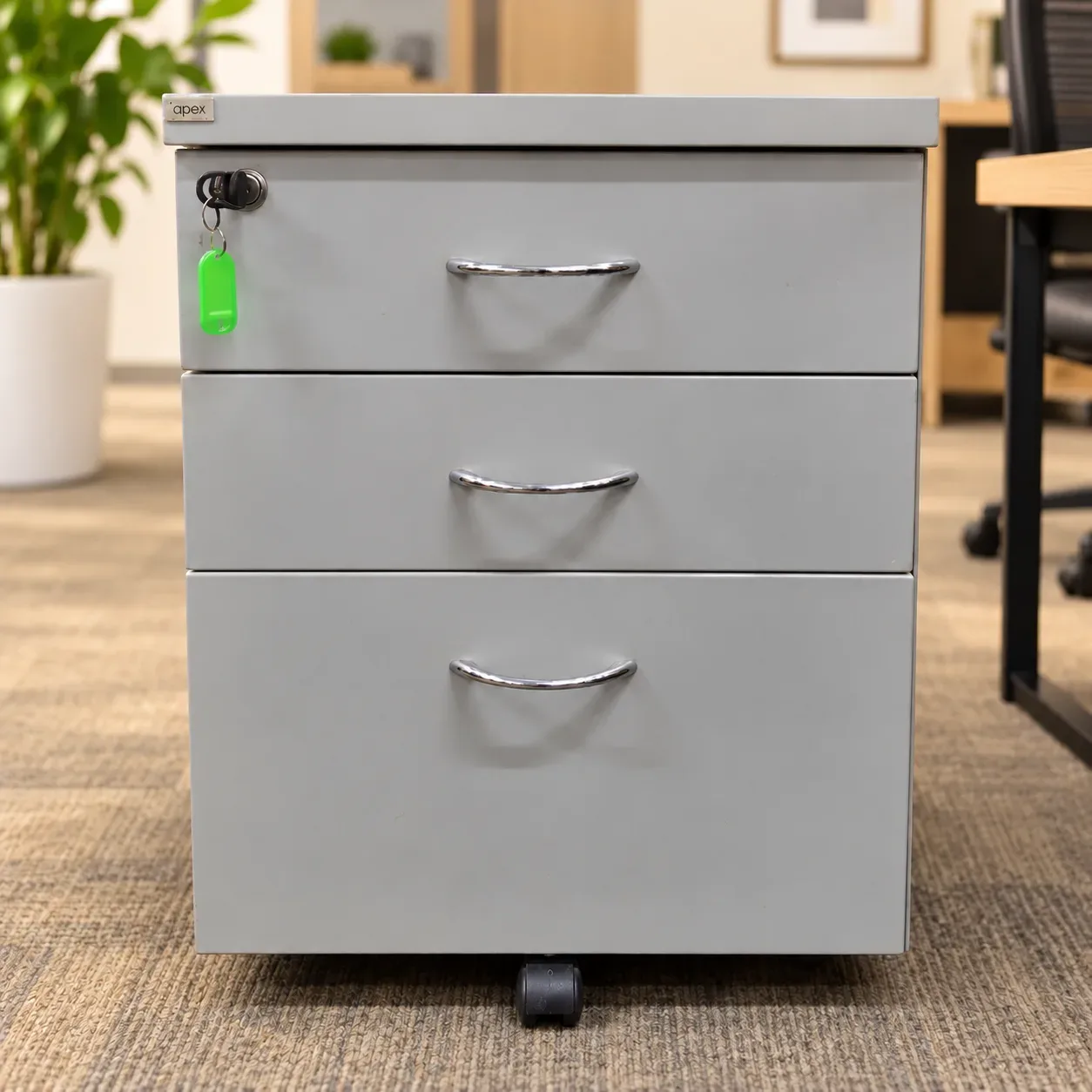
A tall cabinet may suit the final wall yet be difficult to turn through a narrow entrance. If the route is close, share the measurements and photographs with whoever you intend to use for the move. Do not assume that a piece can be dismantled simply because it looks modular.
Ask your building management about any access arrangements relevant to moving furniture. Confirm the collection details for the chosen item separately when planning the move.
Build a room around useful pieces
A second-hand setup does not need every piece to come from the same range. A consistent colour palette, similar proportions or a repeated material can help different items feel comfortable together.
Keep the essentials practical. Choose the desk depth you need, a chair that suits you and storage you can reach easily. Appearance matters, but a piece that makes daily work awkward is unlikely to remain a favourite.
For a larger office, start with the items that are hardest to match in quantity. Our bulk office furniture guide covers planning a coherent purchase across several workstations.
Find a piece with a next chapter
At Warebid, we bring pre-owned furniture and equipment together for people finding their next useful piece. We’re supported by CPL Services, whose work includes office clearance ahead of reinstatement and asset buybacks.
Browse storage and shelving or tables and workstations with your measurements beside you. Shortlist pieces for the space you have and the way you actually work.
Frequently asked questions
What should I measure before choosing second-hand furniture?
Measure the item’s intended position, the room it needs while in use and the access route. For desks and chairs, include seating and movement; for storage, include doors and drawers when open.
Can different furniture styles work in one office?
Yes. A consistent colour palette, similar proportions or repeated materials can bring different pieces together. Prioritise the size and function each area needs.
How do I shortlist furniture on Warebid?
Start with the relevant category, read each item’s photographs and details, and compare them with your measurements and required quantity. Ask about any details that remain unclear.
 WhatsApp channel
 Telegram channel