

 WhatsApp channel
 Telegram channel
The Warebid blog
Buying a Whiteboard in Singapore: Mobile or Wall-Mounted?
Choose a whiteboard by how you will use it. Compare mobile and wall-mounted formats, check the surface, and test a second-hand board before buying.
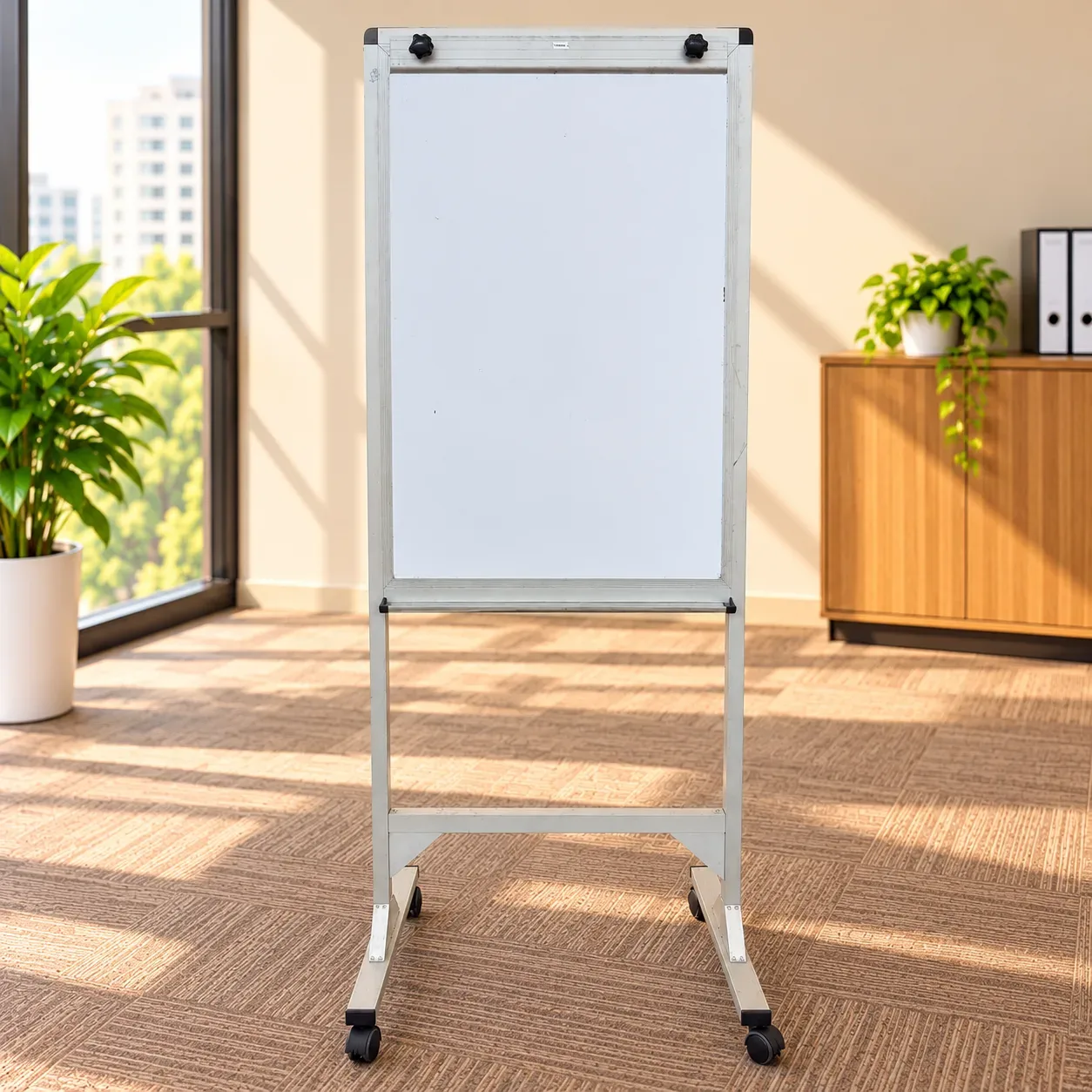
A whiteboard should be easy to read, comfortable to write on and practical to keep in the room. When buying a whiteboard in Singapore, start with how you will use it: a fixed teaching position, a shared meeting room or a space that changes throughout the week.
Choose a wall-mounted board when the writing position stays the same. Choose a mobile whiteboard when you need to move it between rooms or rearrange the teaching area. For a second-hand board, the writing surface and frame condition matter as much as the format.
Mobile or wall-mounted: which works better?
| Your main requirement | Format to consider | Check before buying |
|---|---|---|
| A permanent teaching or meeting position | Wall-mounted | Suitable wall, mounting method and readable placement |
| One board shared between rooms | Mobile board on castors | Overall width, base depth, doors and the route between rooms |
| Frequent changes to classroom or training layouts | Mobile board | Stability while writing and a place to park it |
| Limited clear floor area | Wall-mounted | Wall space and permission to install |
| Writing plus printed notices | A verified magnetic surface | Test the actual magnets and papers you intend to use |
A mobile board avoids committing to a wall position, but its feet occupy floor space. A wall-mounted board keeps that area clear, but installation becomes part of the purchase. Ask whether mounting brackets and fixings are included, and follow the model's installation instructions for the wall concerned.
“Mobile” also does not automatically mean double-sided, reversible or fitted with brakes. For example, Nobo lists rotation, two writing surfaces and lockable castors as specific features of its Impression Pro mobile board. Check each feature on the unit you are considering.
What whiteboard surface should you choose?
The frame and white finish will not tell you everything about the writing surface. Ask for the manufacturer and model, then check the specification.
| Surface | Useful distinction | Used-board check |
|---|---|---|
| Melamine | Commonly a non-magnetic option for occasional writing | Test several areas for persistent marks |
| Painted steel | A magnetic surface with a dry-erase coating | Look for scratches, worn patches and uneven erasing |
| Porcelain or enamel on steel | Often specified for frequent use | Check for chips, damage and satisfactory erasing |
| Glass | Available in magnetic and non-magnetic versions | Check edges, mounting parts and the required magnets |
These distinctions follow Quartet's surface guide. The exact model and its condition still determine whether a particular board suits you.
If you need a magnetic whiteboard for rosters or teaching cards, bring a magnet and a sample sheet to the viewing. Magnetic glass boards may require stronger magnets than an ordinary steel-backed board. A successful magnet test confirms that practical function; it does not identify the surface coating or prove its durability.
Choose the usable writing area
Ask for the writing-area dimensions separately from the overall frame dimensions. With a mobile whiteboard, also request the base depth and total height.
For an office, think about what must stay visible together: a meeting agenda, a sketch and an action list. For a tuition room, consider whether the tutor needs space for a question and its working without repeatedly erasing sections.
Try reading a sample line from the furthest normal seat. Check the view from the sides and under the lighting you expect to use. A large board is less useful if the lower section sits behind a table or reflections obscure the writing.
For a mobile unit, include its parking position in the decision. It should have somewhere to stand without obstructing a doorway or the route people use through the room.
How to inspect a second-hand whiteboard
1. Test writing and erasing across the surface
With the seller's permission, use a suitable dry-erase marker in the centre, near the edges and on any visibly marked area. Let the ink dry and erase it. Look for faint previous writing, patches that erase differently and scratches that interrupt a line.
Ask whether the remaining marks have been cleaned with a product approved for that surface. A clean-looking photograph cannot replace this test. Treat stubborn residue as an unresolved condition issue until you have seen the result.
2. Check the frame, tray and moving parts
Inspect the joints and fixings for looseness, missing parts or damage. Check that the tray is secure and that no broken edge is exposed where users stand.
On a wheeled board, roll it gently, turn it and test any fitted wheel locks. Write on it in its intended stationary position. If the board rotates, ask the seller to demonstrate the release and locking mechanism before trying it yourself.
3. Confirm what the listing actually includes
Ask about markers, erasers, mounting hardware and detachable components. Do not assume that accessories shown in a photograph form part of the sale.
For example, Warebid's catalogue includes a freestanding whiteboard with a castor frame and tray, described with minor marks or smudges. That description does not establish a magnetic surface, reverse writing face or wheel brakes. Those features need separate confirmation when enquiring about the item.
Compare the complete purchase cost
Compare the price of the board together with any delivery, installation, missing fittings and essential accessories. Request the total for your address and access conditions before confirming an order.
A used board makes sense when its condition and included parts meet your needs at a worthwhile total price. A new board may be more suitable when you need several matching units, a precise specification or clearly defined warranty terms. Check those terms with the seller; a manufacturer's guarantee on a new product should not be assumed to transfer to a used purchase.
Keep the surface usable after purchase
Follow the board manufacturer's cleaning instructions. Quartet recommends erasing the ink, using the appropriate cleaner and drying the surface before writing again; its maintenance guidance distinguishes cleaners for conventional whiteboards and glass boards.
If the model is unknown, identify the surface before applying a strong cleaning product. Use the intended markers and keep the eraser clean so you can assess the board's actual performance without spreading residue.
Ask Warebid about a suitable whiteboard
Browse Warebid's furniture and equipment listings, or email [email protected] with your preferred writing-area size, mobile or wall-mounted format and delivery location.
For a used board, ask for current photographs, a writing-and-erasing demonstration and confirmation of the frame, wheels and included parts. Availability and condition should be confirmed for the specific unit before purchase.