

The Warebid blog
Filing Cabinets in Singapore: Drawers, Cupboards or Tambour Storage?
Choose office storage around the files you actually use. Compare drawers, cupboards and tambour doors, then check rails, usable dimensions, keys and condition.
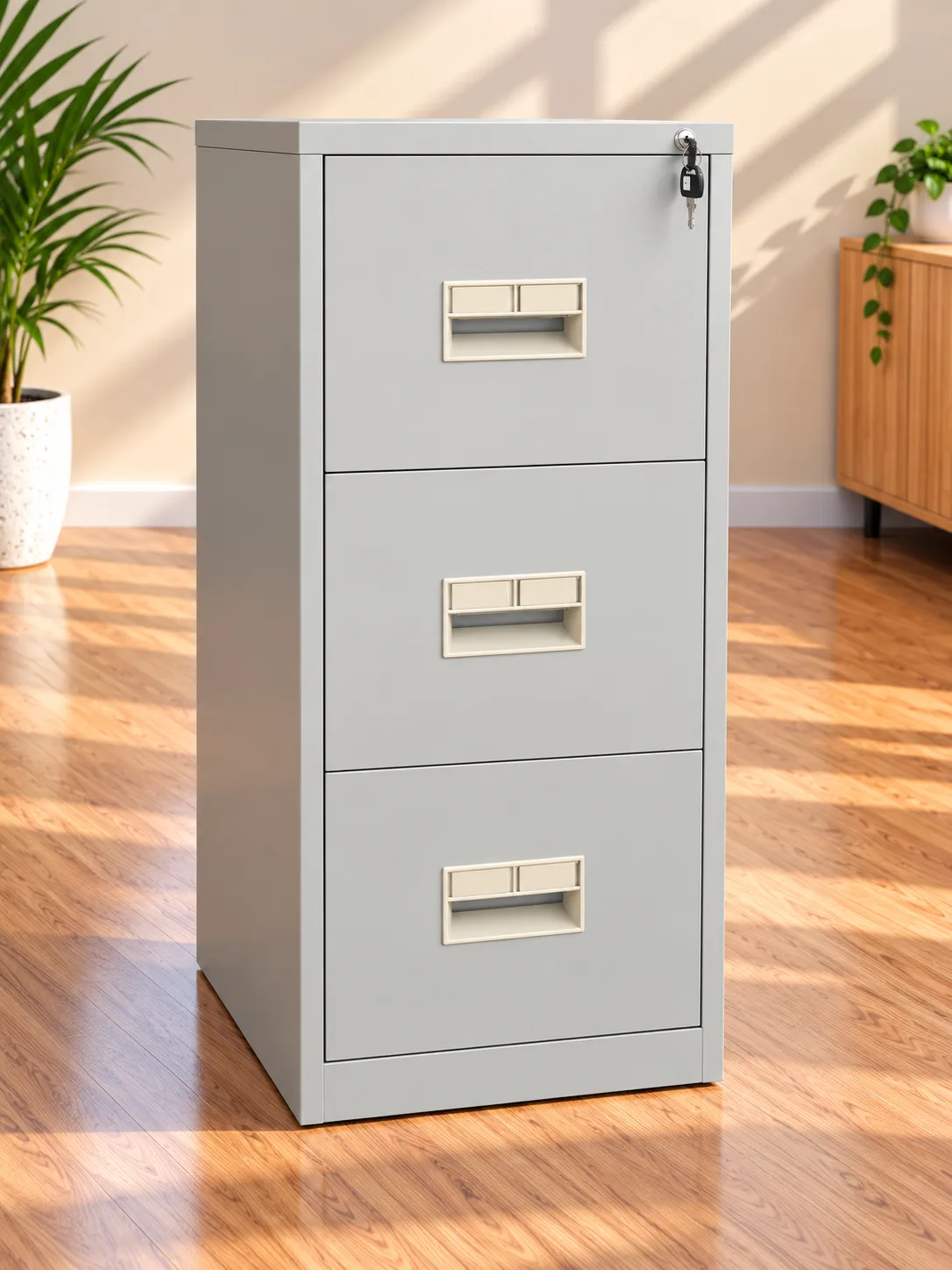
The best filing cabinet for your office is the one that makes your paperwork easy to put away and retrieve. A deep drawer can be useful for hanging files, while a cupboard may suit a row of lever-arch binders better. A tambour door changes how you access the contents; it does not tell you what fittings are inside.
When choosing a filing cabinet in Singapore, start with a few representative files from your office. Their format, dimensions and frequency of use are more useful buying criteria than the number of drawers alone.
Match the storage to your documents
| What you need to store | Type to consider | Detail to establish |
|---|---|---|
| Hanging folders used frequently | Filing drawers | Compatible rails, folder format and usable filing length |
| Lever-arch binders and document boxes | Cupboard with shelves | Clear shelf height, depth and supported load |
| A mix of binders, stationery and supplies | Adjustable-shelf cupboard | Included shelves, support clips and adjustment positions |
| Files accessed through a sliding or tambour front | Cabinet with suitable internal fittings | Clear opening and access to the end of each shelf |
Separate active files from archive material before deciding. A drawer beside the workstation can serve daily paperwork, while boxed records may be easier to organise on labelled shelves. Buying more drawers will not necessarily solve a problem caused by unsuitable folders.
Check the hanging files, not just the paper size
“Fits A4” is an incomplete answer. A4 paper can sit inside a folder that needs a particular spacing between suspension rails. Ask whether the cabinet accepts your hanging-folder system and in which orientation.
Bisley's office filing range illustrates why this matters: different ranges support different formats, including A4-only designs and other configurations for foolscap or letter filing. Some are designed specifically for suspension filing. Those specifications describe Bisley's identified products; they cannot be assumed for an unlabelled used cabinet.
Take one of your folders to the viewing, or send its measurements and photographs. Establish:
- The spacing and shape of the supports on which its hooks will rest.
- Whether the necessary rails, crossbars or adapters are included.
- The clearance for the folder and its label when the drawer closes.
- How far the drawer opens and whether you can reach files at the back.
A drawer that opens smoothly can still be unsuitable if the required rails are missing. Price replacement fittings before buying, and confirm compatibility with the actual model.
Compare usable space inside the cabinet
External dimensions help you shortlist an office cabinet. Internal dimensions tell you whether your documents fit.
For shelves, measure the clear height between shelves, usable depth with doors closed, and width between obstructions. Include binder tabs, handles and boxes rather than measuring loose paper alone. Check whether shelf supports are present and whether the positions can be changed.
For sliding doors, measure the opening available with the door moved aside. For tambour cabinets, inspect the slatted door and its tracks, then check access at both ends. Cabinet width and clear opening width are different measurements.
These examples from Warebid's catalogue show the questions worth asking. Dimensions are listed external measurements, not verified internal capacities or a promise of current availability.
| Catalogue example | Listed dimensions | Confirm before choosing |
|---|---|---|
| Steel three-drawer filing cabinet | 46 W × 62 D × 102 H cm | Hanging-file fittings, drawer clearance and operation; keys are described as supplied |
| Steel four-drawer filing cabinet | Check the listing | Key availability and lock operation remain unconfirmed |
| Low double-door cupboard | 80 W × 45 D × 90 H cm | Usable height across the one shelf and two storage levels |
| Full-height glass sliding-door cabinet | 91 W × 46 D × 183 H cm | Clear opening, shelf fittings and condition; the fitted lock is untested |
| Tambour cabinet | 80 W × 50 D × 125 H cm | Internal shelf arrangement, door travel and usable opening |
Inspect the moving parts and installation requirements
Ask for a demonstration of each drawer or door. Watch for binding, scraping, sagging fronts and loose handles. Examine shelf supports, rail fixings, corners and the cabinet base. Cosmetic marks can be acceptable; damaged fittings need a clear explanation and a practical remedy.
Follow the manufacturer's loading and stability instructions for the exact model. Do not infer a load rating from steel construction or test stability by pulling out multiple drawers. If an interlock is fitted, have its operation demonstrated without forcing it.
Installation requirements differ. For example, IKEA's GALANT filing-cabinet assembly instructions require the specified wall attachment and suitable wall fixings. That is a requirement for that product, not evidence that every used cabinet has the same installation method. Obtain the relevant instructions and replace missing required hardware before use.
Check what the lock actually provides
Ask the seller to lock and unlock the cabinet using the keys or code being supplied. Confirm which drawers or doors the lock secures. A visible lock barrel does not establish that the key exists or the mechanism works.
A lockable office cabinet should not be treated as a safe or described as fireproof without appropriate evidence. FireKing's ratings guidance distinguishes tested protection through defined ratings. If your documents require fire or security protection, establish the exact cabinet's certification and its suitability for those contents separately.
Include any compatible replacement lock, keys, rails, shelves and necessary installation in your buying decision. A complete cabinet can be better value than a cheaper unit that cannot yet do the job.
Questions buyers often ask
Is a cupboard better than a filing cabinet?
A cupboard is often the more practical starting point for binders and boxes. Filing drawers suit compatible hanging folders. Choose according to how your records are stored and retrieved.
Can I add hanging files to any drawer?
Do not assume so. Confirm suitable supports, clearances, intended use and compatible fittings for that drawer. A large empty compartment alone is insufficient.
What should I send when asking about a used cabinet?
Send the listing, your folder or binder dimensions, the quantity you need to store, and any requirements for locks or installation. A photograph of a representative file makes compatibility easier to establish.
Find storage that works with your files
Browse Warebid's furniture and equipment, then email [email protected] with the cabinet you are considering and the files you need it to hold. Ask for the missing measurements, included fittings and condition details before deciding.
 WhatsApp channel
 Telegram channel